Salmo salar: The Atlantic Salmon.
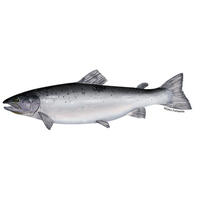

Salmo salar, commonly known as the Atlantic salmon, is one of the most iconic anadromous fish species of the Northern Hemisphere. Renowned for its long-distance migrations between freshwater rivers and the open ocean, it plays a crucial ecological, cultural, and economic role across the North Atlantic region. Despite its broad historical distribution, wild Atlantic salmon have declined sharply in many parts of their native range.
Taxonomy and Classification.
Salmo salar belongs to the family Salmonidae and the genus Salmo. It was first described by Carl Linnaeus in 1758 and is the only species of true Atlantic salmon native to the North Atlantic basin. It is phylogenetically distinct from the Pacific salmon species of the genus Oncorhynchus. Although Salmo salar is treated as a single species throughout its range, populations show strong genetic structuring due to precise homing behavior and long-term isolation within individual river basins. As a result, many river populations represent unique evolutionary and ecological units.
Physical Characteristics.
Atlantic salmon are powerful, streamlined fish adapted to both freshwater and marine environments. Typical characteristics include:
- A silvery body with a dark blue-green or brown back during the marine phase
- Numerous small black spots on the upper flanks, gill covers, and often the tail
- A more elongated and robust body than most trout species
- Pronounced sexual dimorphism during spawning, especially in males, which may develop bronze or reddish coloration and hooked jaws
Juveniles (parr) display vertical bars and red spots that provide camouflage in river habitats.
Adult size varies greatly depending on feeding duration at sea. Most individuals measure 60–100 cm, but large specimens may exceed 120 cm and weigh over 20 kg.
Habitat and Distribution.
Salmo salar is native to rivers draining into the North Atlantic Ocean. Its historical range includes:
- Europe: from the Iberian Peninsula northward through western and northern Europe to Scandinavia and northwest Russia
- North America: from northeastern United States north to Labrador and Arctic Canada
Spawning occurs exclusively in freshwater rivers and streams with clean gravel substrates, cold temperatures, and high oxygen levels. After migrating to sea, Atlantic salmon feed widely across the North Atlantic before returning to their natal rivers. In addition to anadromous populations, some landlocked forms exist, notably in lakes in Scandinavia and Russia, where they complete their entire life cycle in freshwater.
Ecology and Life History.
Salmo salar has a complex anadromous life cycle consisting of several distinct stages:
- Alevin: newly hatched larvae that remain within the gravel, feeding on yolk reserves
- Parr: juvenile stage in freshwater lasting 1–3 years
- Smolt: physiological transformation enabling transition to saltwater
- Adult: marine feeding phase lasting 1–3 years, followed by return migration
Spawning typically occurs in autumn. Females excavate redds in gravel beds where eggs are deposited and fertilized externally. After spawning, some adults, particularly in Europe, survive and may return to sea as kelts, potentially spawning again in subsequent years.
Diet varies by life stage:
- In freshwater: aquatic insects and invertebrates
- At sea: fish, crustaceans, and squid
Conservation Status and Threats.
Globally, Salmo salar is listed as Least Concern by the IUCN, but this masks severe regional declines. Many river populations are endangered, critically endangered, or already extinct.
Major threats include:
- Habitat fragmentation caused by dams and barriers blocking migration routes
- Overfishing, both historically and in some regions today
- Climate change, affecting river temperatures and oceanic feeding grounds
- Aquaculture impacts, including disease transmission, genetic introgression from escapees, and parasite pressure
- Pollution and habitat degradation from agriculture, industry, and urban development
Conservation efforts focus on river restoration, barrier removal, fish passage, fishing regulation, and reducing the ecological impact of salmon farming.
Cultural and Scientific Significance.
The Atlantic salmon holds deep cultural significance across its range, featuring prominently in Indigenous traditions, folklore, and angling heritage in both Europe and North America. It has long been a cornerstone of commercial and recreational fisheries.
Scientifically, Salmo salar is one of the most intensively studied fish species worldwide. It serves as a model organism for research on migration, homing behavior, population genetics, fisheries management, and conservation biology. Today, it is increasingly regarded as a flagship species for the protection of free-flowing rivers and healthy marine ecosystems.