Salmo obtusirostris: The Softmouth Trout.
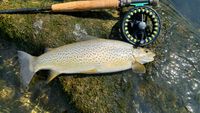


Salmo obtusirostris, commonly known as the Adriatic trout or Softmouth trout, is a rare and evolutionarily distinct salmonid species native to karstic rivers of the western Balkans. Characterized by its blunt snout, specialized ecology, and fragmented distribution, it represents one of the most unique trout lineages in southeastern Europe and a key element of Adriatic freshwater biodiversity.
Taxonomy and Classification.
Salmo obtusirostris is a species within the family Salmonidae and the genus Salmo. It is a part of a distinct Adriatic lineage with clear morphological, ecological, and genetic differences. Within the species, several subspecies are recognized, reflecting long-term isolation in separate river systems:
- Salmo obtusirostris oxyrhynchus – Neretva River basin (Bosnia and Herzegovina, Croatia)
- Salmo obtusirostris salonitana – Jadro River near Solin (Croatia)
- Salmo obtusirostris zetensis – Morača River basin (Montenegro)
These subspecies represent locally adapted populations shaped by karst hydrology, isolation, and historical river fragmentation.
Physical Characteristics.
Salmo obtusirostris is most easily distinguished by its blunt, rounded snout, from which its scientific name is derived (obtusus = blunt, rostrum = snout). Key characteristics include:
- A rounded head profile with a short, blunt snout
- A silver to brownish body coloration with variable spotting
- A streamlined, elongated body adapted to flowing water
- Relatively subtle coloration compared to other Mediterranean trout
Adults typically reach 30–60 cm in length, though size varies between subspecies and river systems.
Habitat and Distribution.
Salmo obtusirostris is endemic to karstic rivers draining into the Adriatic Sea, primarily in:
- Croatia
- Bosnia and Herzegovina
- Montenegro
It inhabits clear, cold, well-oxygenated rivers flowing through limestone landscapes, often characterized by strong springs, stable flow regimes, and deep pools. Preferred habitats include spring-fed river sections, slower glides, and pools where flow and temperature remain relatively stable throughout the year. Due to the isolated nature of karst watersheds, populations are naturally fragmented, which has contributed to both subspecific differentiation and high vulnerability.
Ecology and Life History.
Salmo obtusirostris is a resident, non-migratory trout adapted to stable karst environments. Its diet consists mainly of aquatic insects, crustaceans, and small fish. Spawning generally occurs in late winter or early spring, depending on local hydrological conditions. Eggs are deposited in clean gravel substrates, often near spring inflows where temperature and oxygen levels remain stable. Juveniles develop within the same river systems and show strong site fidelity.
Conservation Status and Threats.
Salmo obtusirostris is listed as Endangered on the IUCN Red List. The species faces multiple, often interacting threats:
- Habitat degradation – caused by dam construction, river regulation, pollution, and water abstraction
- Hybridization – with stocked non-native trout, particularly Salmo trutta, leading to genetic introgression
- Fragmentation – of river systems, preventing natural gene flow between populations
- Climate change – increasing water temperatures and altering flow regimes in sensitive karst systems
Conservation actions include habitat protection, regulation of water use, genetic monitoring, and the restriction or prohibition of trout stocking in native habitats. Due to its extreme localization, each remaining population is of high conservation value.
Cultural and Scientific Significance.
Salmo obtusirostris is a flagship species for the karst rivers of the western Balkans and an important subject of scientific research. Its unique morphology, subspecific diversity, and adaptation to limestone-dominated hydrology make it a valuable model for studying speciation, isolation, and conservation genetics in freshwater fishes. The species also highlights the fragility of Mediterranean freshwater ecosystems, where even small-scale habitat alterations can have irreversible consequences for endemic fauna.