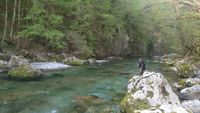
Salmo marmoratus: The Marble Trout.
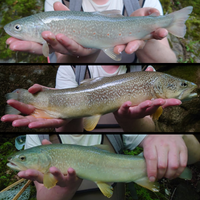
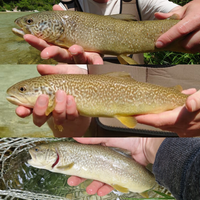
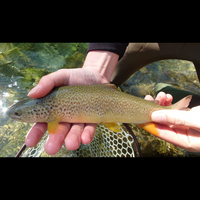
Salmo marmoratus, commonly known as the marble trout, is one of Europe’s most iconic and visually striking freshwater fish. Endemic to rivers draining into the Adriatic Sea, this large salmonid is renowned for its distinctive marbled pattern, impressive size, and ecological role as a top predator. Once thought to be on the brink of extinction, the marble trout has become a flagship species for freshwater conservation in the western Balkans and northern Italy.
Taxonomy and Classification.
Salmo marmoratus belongs to the family Salmonidae and the genus Salmo, which includes trout and Atlantic salmon. It has long been recognized as a distinct species, although its taxonomy was historically complicated by extensive hybridization with introduced Salmo trutta (brown trout).
Genetic and morphological research has since confirmed S. marmoratus as a valid and separate species within the Adriatic trout lineage. It represents one of the most specialized evolutionary branches of European trout, adapted to large, cold, fast-flowing rivers.
Physical Characteristics.
The marble trout is immediately recognizable by its unique appearance. Key characteristics include:
- A light greenish, grey, or brown background coloration covered in dark, irregular, worm-like marbling
- Absence or near absence of red spots, unlike most other trout species
- A large head, accounting for approximately 22–25% of total body length
- A long, powerful body adapted for predation
Marble trout are among the largest trout species in Europe. While most individuals encountered measure between 30 and 70 cm, specimens can exceed 1 meter in length. The largest recorded individual reached approximately 120 cm and 22.5 kg.
Habitat and Distribution.
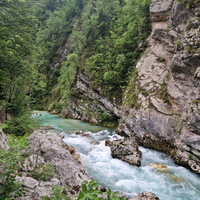
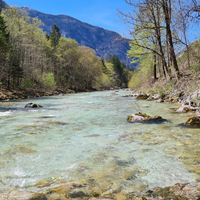
Salmo marmoratus is native to the Adriatic river basin, inhabiting rivers that flow into the Adriatic Sea. Its historical range includes river systems in:
- Northern Italy
- Slovenia (notably the Soča River basin)
- Croatia, Bosnia and Herzegovina, and Montenegro
- Parts of Albania and Switzerland
Today, genetically pure populations are reliably found only in Slovenia and parts of Italy. In other regions, remaining marble trout are largely hybridized with brown trout, and in some areas, such as much of Albania, the species is likely extinct. Marble trout inhabit cold, well-oxygenated rivers where water temperatures rarely exceed 15 °C. Juveniles occupy shallow tributaries and side channels, while adults prefer deeper pools and main river channels.
Ecology and Life History.
Marble trout exhibit highly specialized behaviour adapted to fast-flowing rivers. Despite their size, they often occupy surprisingly swift water, where they lie motionless on the riverbed with their chin resting against rocks, making minimal movements to intercept passing prey. Combined with their marbled camouflage, this behaviour makes them extremely difficult to spot. Juveniles and subadults feed mainly on aquatic insects, larvae, and other invertebrates. Above approximately 70 cm, marble trout become almost entirely piscivorous, preying on other fish, including smaller trout. Despite their predatory nature, marble trout are shy and easily spooked. Wild individuals are highly aware of their surroundings and may retreat to cover for hours after disturbance. All size classes rely heavily on nearby shelter, such as large boulders, undercut banks, and submerged cavities.
Sexual maturity is typically reached at:
- 3+ years for males
- 4+ years for females
Spawning occurs in late autumn to early winter, usually in November and December, on clean gravel substrates.
Conservation Status and Threats.
Salmo marmoratus is listed as Vulnerable on the IUCN Red List. Its primary threats include:
- Genetic introgression from stocked Salmo trutta
- Habitat fragmentation caused by dams and river regulation
- Water abstraction and pollution
- Climate change, reducing cold-water habitat availability
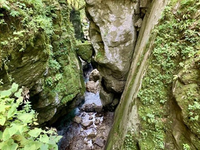
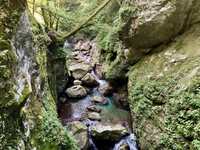
By the late 20th century, pure marble trout were believed to be extinct until a genetically intact population was discovered in 1985 in the remote Zadlaščica River in Slovenia. This discovery triggered intensive research and conservation efforts, leading to the identification of several genetically unique populations.
Although some populations were later lost due to habitat disturbance, conservation programs established protected sanctuary streams, expanded available habitat, and initiated controlled breeding. These efforts increased protected habitat by approximately 40% and restored marble trout dominance in key rivers of the Soča basin.
Cultural and Scientific Significance.
The marble trout is both a scientific landmark and a cultural symbol of the Adriatic river systems. It has become one of Europe’s most important case studies in conservation genetics, species recovery, and freshwater ecosystem management. In the Soča Valley, its recovery demonstrates how conservation, recreational fishing, and sustainable tourism can reinforce one another. Catch-and-release fly fishing for marble trout attracts anglers from across Europe, generating significant income for the region. This revenue directly supports habitat protection, breeding programs, monitoring, and enforcement of strict fishing regulations. Many small tributaries are managed as fully protected breeding or grow-out streams, supplying fish for carefully controlled stocking in fishable rivers. This model has allowed genetically pure marble trout to reclaim their ecological role while supporting local livelihoods.